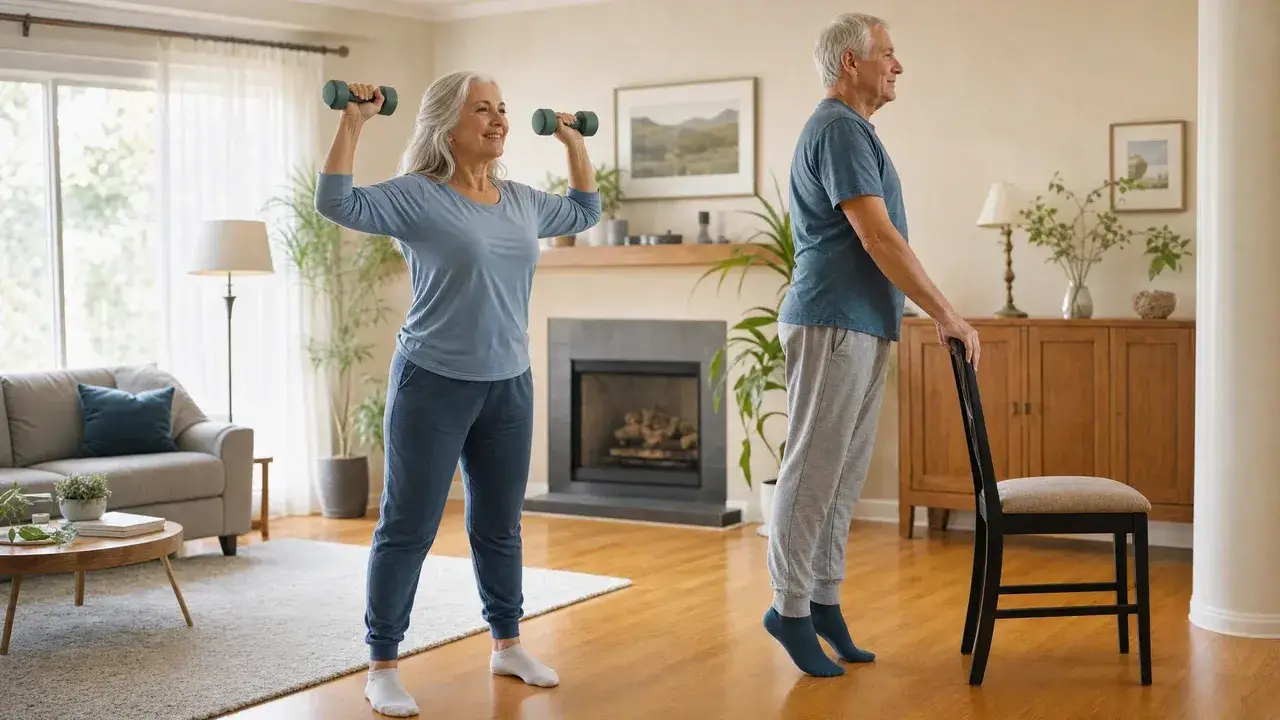
Reduce Your Fracture Risk After 55: The Three-Pillar Plan to Build Bone and Stay on Your Feet

Mitch - Be Mobile Physiotherapy
Mitch is a physiotherapist with over 23 years' experience helping adults aged 55+ exercise safely, including when they're managing pain or chronic conditions. He is the Founder and CEO of Be Mobile Physiotherapy, a physio-led exercise company offering online and in-person programmes that keep older adults strong, confident, and able to enjoy life with the people they love.
Read Mitch's full bio →


A practical guide from the Be Mobile Physiotherapy team on the three-pillar exercise plan, taken straight from the latest osteoporosis guidelines, that builds stronger bones and helps keep you on your feet.
So you've reached a point where a broken bone has started to feel like a genuine worry.
Maybe your doctor has mentioned that your bones are thinning. Maybe a friend had a fall and a fracture that changed everything, and it gave you a fright. Or maybe you just catch yourself moving a little more carefully these days, taking the stairs slowly, thinking twice on a wet footpath.
That worry is real, and it's a fair one to have. One in three women over fifty will have an osteoporotic fracture at some point, so this isn't a fear anyone has dreamed up.
Here's what we want you to know straight away. A fracture isn't simply bad luck sitting in wait for you. Two clear things drive the risk, and both of them respond to the right kind of exercise, at any age.
Let's break it down. First, the two things we're actually working against.
Two Risks, Not One
Most people hear "fracture risk" and picture one thing: how strong the bones are. That's only half the story.
There are two risk factors that matter here, and a good plan works on both.
The first is low bone density. Bones that have thinned over the years are simply easier to break, and that's what the first two pillars are for.
The second is the fall itself. This is the one people tend to forget. More than ninety percent of hip fractures happen because of a fall, which means the fall is very often the thing that turns a thinning bone into a broken one.
There's a hopeful side to that. If a fall is usually what does the damage, then staying on your feet becomes one of the most direct ways to protect yourself. You get to work on both sides at once: stronger bone underneath, steadier balance on top.
That's the whole idea behind the plan. Strong bones matter, and so does keeping yourself upright, and 20 minutes a few times a week can look after both.
There's good evidence for it too. Combining balance work with resistance training has been shown to cut the rate of falls by up to a third. The plan itself comes straight from the most recent osteoporosis guidelines from the Royal Australian College of General Practitioners, so this isn't just our opinion.
Why Your Bones Respond at Any Age
Here's the part that should take some of the fear away.
Your bones aren't a fixed frame that only ever wears down. They're living tissue, and living tissue adapts to what you ask of it.
When you load a bone, by lifting something heavy or landing from a small jump, that load sends a signal. The bone reads it as a demand and answers by laying down fresh, stronger tissue. Ask nothing of it, and the signal goes quiet.
The muscles that hold you steady work the same way. Leave them alone and they quietly fade, which physios call sarcopenia, and the reassuring part is that they answer back the moment you start challenging them again, whether you're fifty-five or eighty-five.
So the goal across all three pillars is the same. Give your bones and muscles a reason to get stronger, then give them that reason again, a little harder, as they adapt.
Is This Safe for Thinning Bones?
Being told your bones are vulnerable and then hearing words like "lifting", "impact" and "jumping" in the same breath can sound like the opposite of sensible.
So let's be honest about both sides, the way we always try to be. We come back to a measured "risk vs reward" view here.
What is the risk of not doing this? Your bones keep thinning. Your balance keeps slipping. The odds of a fall creep up, and with them the odds of the very fracture you're worried about. Doing nothing feels safe, and it's quietly the riskier road.
What is the risk of doing this? Low, as long as you start at the right level and build up slowly. The major studies looking at exactly this kind of training in older women with thinning bones recorded very few injuries or problems. However, if you are very frail, or if you have a high risk of vertebral (spine) fractures, or a recent fracture or surgery, your exercise program may need to be modified, and tailored to minimise the potential to increase the risk of falls, injury, and vertebral fractures. So please check with your doctor or physio before adding these in.
Every pillar in this plan has a gentle starting point. The motto we keep coming back to is the same one we use for everything: start low, go slow. Begin where the effort is real but the movement stays comfortable and controlled. Build up over weeks and months, not days. There's no prize for rushing.
This guide is for educational purposes only and should not replace specific advice from a medical professional.
A reminder from our team"The word impact frightens a lot of the people I see. They picture their bones as something delicate, so landing from a jump feels reckless to them. What I always explain is that a sensible amount of load is exactly the message a bone needs to get stronger, and we never start anyone at the deep end. We begin with the gentlest version, let the body get comfortable, then build from there. Done that way, it's one of the safest and most useful things you can do for yourself."
Want to follow along instead of working from a written guide? Our free 55+ Video Series walks you through full strength and balance workouts, with our physio team demonstrating every move and every modification, so you can pick the right version for you.
Watch the Free Video Series →The Three-Pillar Plan
Here are the three pillars, in order. The first two build stronger bone. The third keeps you on your feet, so that bone is less likely to be tested in the first place. You won't need a gym for any of them.
1. Progressive Resistance Training
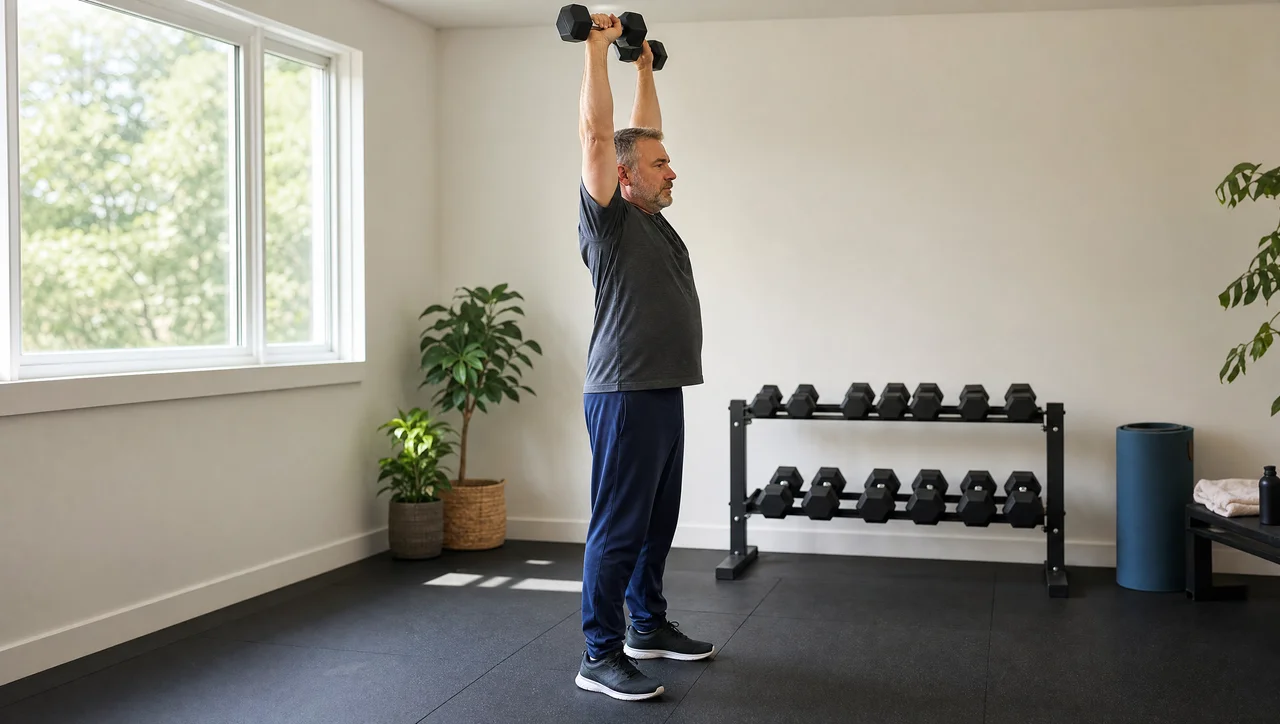
Lifting weights is one of the most powerful tools you have for building bone. When a working muscle pulls hard on the bone it's attached to, the bone reads that pull as a demand and reinforces itself.
There's one word that does all the heavy lifting here, and it's progressive.
Think about the first time you get back into the garden in spring. For the first few days, the work is hard on your hands. Give it a week or two and the skin toughens up, and the same jobs stop bothering you. Your bones and muscles do exactly the same thing.
A load that felt hard in week one slowly becomes easy, and once it's easy, the signal to keep getting stronger goes quiet. That's your cue to add a little more.
A great place to start is the overhead press, which builds bone through the shoulders, upper back and spine.
📺 Watch the overhead press in the video above.
How to do it:
- Stand tall with your feet firmly planted, holding a weight in each hand at shoulder height.
- Press your hands straight up until your arms are extended overhead.
- Lower back down slowly and with control. That's one rep.
2. Impact Loading
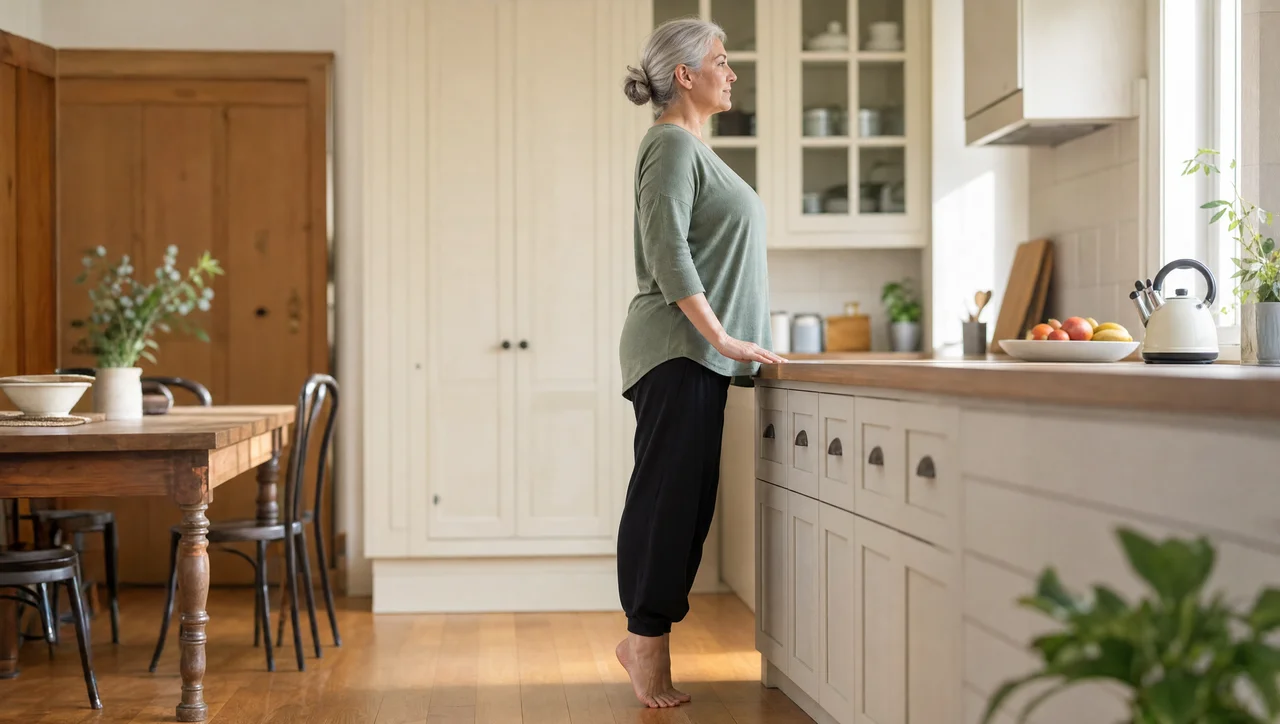
The second pillar also builds bone, this time through impact. When you land from a jump, a force travels up through your skeleton from the ground, and that little jolt is one of the clearest signals your bones can get to grow stronger.
We know how that sounds if you've been told your bones are thinning. This is not an all-or-nothing move, though, and you certainly don't begin with a big jump. You find a level you can manage today and build from there. Here's the ladder.
📺 Watch the impact exercises in the video above.
Heel slams (the gentle start). Stand tall near a bench or kitchen counter for balance. Rise up onto your toes, then drop your heels firmly back down to the floor, aiming for a solid, controlled thud through the ground.
Mini jumps with support (the middle step). Once heel slams feel comfortable, keep a hand on the bench for a little help and add a small two-footed jump, landing softly through your knees.
Bigger jumps (the top of the ladder). As your confidence grows, move on to slightly larger two-footed jumps, looking for a bit more force through the ground on each landing.
Safety note: keep something sturdy within arm's reach, and land softly rather than stiffly. If you are very frail, or if you have a high risk of vertebral (spine) fractures, or a recent fracture or surgery, get the all clear from your doctor or physio before adding impact.
3. High-Challenge Balance Training
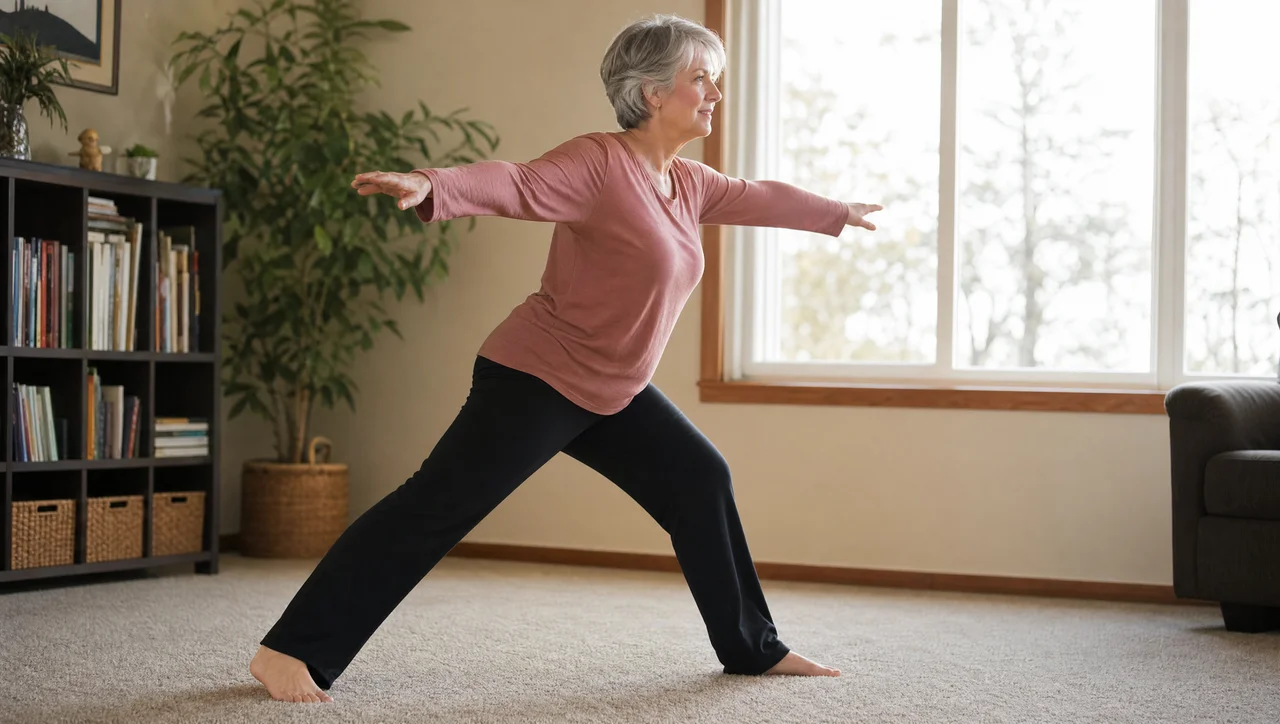
The first two pillars make your bones harder to break. This one is the most direct fracture prevention of all, because it works on the fall itself. Keep yourself upright, and the bone is far less likely to be exposed to a sudden, heavy impact.
Here's the part that matters most, and it's where a lot of balance training falls short. Standing still on one leg? A fine place to begin. Not nearly enough on its own to catch you when you actually stumble.
Good balance isn't only about holding a pose. It's about training your feet to move quickly, so you can catch yourself the instant you feel yourself going.
Two exercises train exactly that.
📺 Watch the balance exercises in the video above.
Fast feet on a book:
- Place a sturdy, flat book on the floor and stand tall beside something you can grab if you need to.
- Quickly tap one foot up onto the book and back down, then the other, keeping your feet moving at a brisk pace.
- The quick, reactive stepping is the whole point. It trains your feet to respond fast, which is exactly what saves you when you trip.
Ice skaters:
- Stand tall, then step out to one side and shift your weight fully onto that leg, like a skater gliding across the ice.
- Step across to the other side and shift your weight onto the other leg.
- Make the steps big enough that you have to work to steady yourself. A little wobble through the hips and ankles is a sign you've found the right level.
A reminder from our team"If I could get one message across, it's the last one: more, not less. When people are frightened of their bones, the natural instinct is to do less and tread carefully, and I completely understand why. The trouble is that doing less is exactly what lets bones and balance fade away. Start gently by all means, but keep going. The people I see who stay active and keep gently challenging themselves are the ones who hold on to their independence the longest."
Prefer a guided routine with the pacing built in? That's exactly what our free 55+ Video Series is for, with our physio team demonstrating every strength and balance movement so you always know you're working at the right level.
Start the Free 55+ Video Series →Putting It All Together
You don't need a gym or a spare hour for this. A short session, two to three times a week, covers all three pillars.
A simple way to run your week:
- Do two to three sessions a week, with a rest day in between where you can.
- Work through one exercise from each pillar: the overhead press for strength, heel slams or jumps for impact, and fast feet or ice skaters for balance.
- Start each exercise at the level where the effort is real but your form stays consistent, then step it up as it gets easier.
- Retest yourself every few weeks. When something starts to feel comfortable, that's your green light to progress.
Done consistently, the changes show up in the ordinary moments. Feeling steady on a wet footpath. Carrying the shopping in from the car without a second thought. Trusting your feet on the stairs again.
The Bottom Line
A warning about your bones can be frightening, and the instinct it sets off is to shrink your world. Move less. Do less. Be careful.
The evidence points the other way. The osteoporosis guidelines put it plainly: people with thinning bones should be encouraged to do more, not less. The safest thing you can do for your bones is give them something to do.
Strong bones, steady feet and the confidence that comes with both do far more than lower a number on a scan. What they really protect is the thing you actually care about: staying on your own two feet, living your life, for as long as you possibly can.
So start where you are. Have a crack at the gentlest version of each pillar this week. Add a little more only when the last one feels easy. This is how you move from worrying about a fall to quietly doing something about it. 💪
Ready to get started? Our free 55+ Video Series includes complete follow-along strength and balance workouts built around this exact approach, with guidance from our physio team so you can build stronger bones and better balance safely from day one.
Get the Free 55+ Video Series →