Stay on Your Feet After 55: Three Dynamic Balance Exercises That Also Build Bone

Mitch - Be Mobile Physiotherapy
Mitch is a physiotherapist with over 23 years' experience helping adults aged 55+ exercise safely, including when they're managing pain or chronic conditions. He is the Founder and CEO of Be Mobile Physiotherapy, a physio-led exercise company offering online and in-person programmes that keep older adults strong, confident, and able to enjoy life with the people they love.
Read Mitch's full bio →


A practical guide from the Be Mobile Physiotherapy team on three at-home balance exercises, with a little impact built in, that train your body to catch itself when it counts and give your bones a reason to grow stronger.
So you've been told to be careful.
Maybe it came from your doctor, after a scan showed osteopenia or osteoporosis. Maybe it came from family who worry about you. Or maybe nobody said it out loud, and you've simply started avoiding anything quick, bouncy or off-balance, because that feels like the sensible thing to do.
We understand why. Here's the problem with it, though. Wrapping yourself in cotton wool doesn't prepare you for the real world.
The real world has kerbs, cords, uneven footpaths and wet tiles, and none of them care how careful you've been. When one of them catches you out, what saves you is a body that already knows how to react.
Here's what we want you to know straight away. The ability to catch yourself after a trip is a skill, and like any skill, it gets better with practice. Even better, the same exercises that train it also send your bones the signal they need to grow denser.
Let's look at why, then get into the three exercises.
Your Two Biggest Weapons Against Osteoporosis
Most people hear "osteoporosis" and think the whole job is building stronger bone. That's only half of it.
The first weapon is falls prevention. Most osteoporotic fractures happen after a fall, and falls almost never happen while you're standing still in your kitchen. They happen when you're moving, turning, reaching, or doing something like stepping off a kerb.
That's why standing on one leg next to the bench, as good a starting point as it is, won't get you all the way there. You need to train dynamic balance, the kind that catches you while you're on the move.
The second weapon is Wolff's Law. This is the principle that bones only get stronger when they're given stress and impact to respond to. If your skeleton never feels a firm landing, it has no reason to lay down new, dense tissue, so it quietly does less and less each year.
Think of it like catching a ball. Nobody expects to take a good catch on the weekend if they've never practised one during the week. Your balance reactions work exactly the same way, and every practice rep counts.
Put the two weapons together and something useful happens. The same exercises that sharpen your reactions also deliver the impact your bones are waiting for. You're training your reflexes to catch you if you trip, whilst giving your skeleton the stress it needs to stay strong.
Is It Safe to Move Quickly With Thinning Bones?
Being told your bones are vulnerable and then hearing words like "impact", "hop" and "jump" in the same breath can sound like the opposite of sensible.
So let's be honest about both sides, the way we always try to be.
What is the risk of not doing this? Your reactions never get a practice run. Your bones never get a signal. Both quietly fade, year after year, while the trips and stumbles of ordinary life keep coming. Doing nothing feels safe, and it's quietly the riskier road.
What is the risk of doing this? Low, as long as you start at the right level and build up slowly. Every exercise below has a gentle starting point, with furniture or a wall within reach, and you decide the size of every step, hop and landing.
However, if you are very frail, or if you have a high risk of vertebral (spine) fractures, or a recent fracture or surgery, your exercise programme may need to be modified and tailored to you. So please check with your doctor or physio before adding these in.
The motto is the same one we use for everything: start low, go slow. During a session, honest effort and a confident thud are exactly what we're after, while sharp pain in a bone or joint is your cue to stop and drop back a level.
Then let the next morning deliver the verdict.
Pulled up fine? Carry on. Sore or stiff for more than a day? Ease back next session and build up again from there.
This guide is for educational purposes only and should not replace specific advice from a medical professional.
A reminder from our team"The people I worry about most aren't the ones doing little hops in their lounge room. They're the ones who've stopped moving quickly altogether. Being told to be careful often turns into being still, and stillness trains nothing. Start with a hand on the furniture, keep the movements small, and you'll be practising the exact skill that prevents the fall everyone's worried about."
Want to follow along instead of working from a written guide? Our free 55+ Video Series walks you through full strength and balance workouts, with our physio team demonstrating every move and every modification, so you can pick the right version for you.
Watch the Free Video Series →The Three Exercises
Here are the three exercises, in order. All you need is a clear patch of floor, supportive shoes, and a sturdy piece of furniture or a wall within easy reach.
1. The Trip and Catch
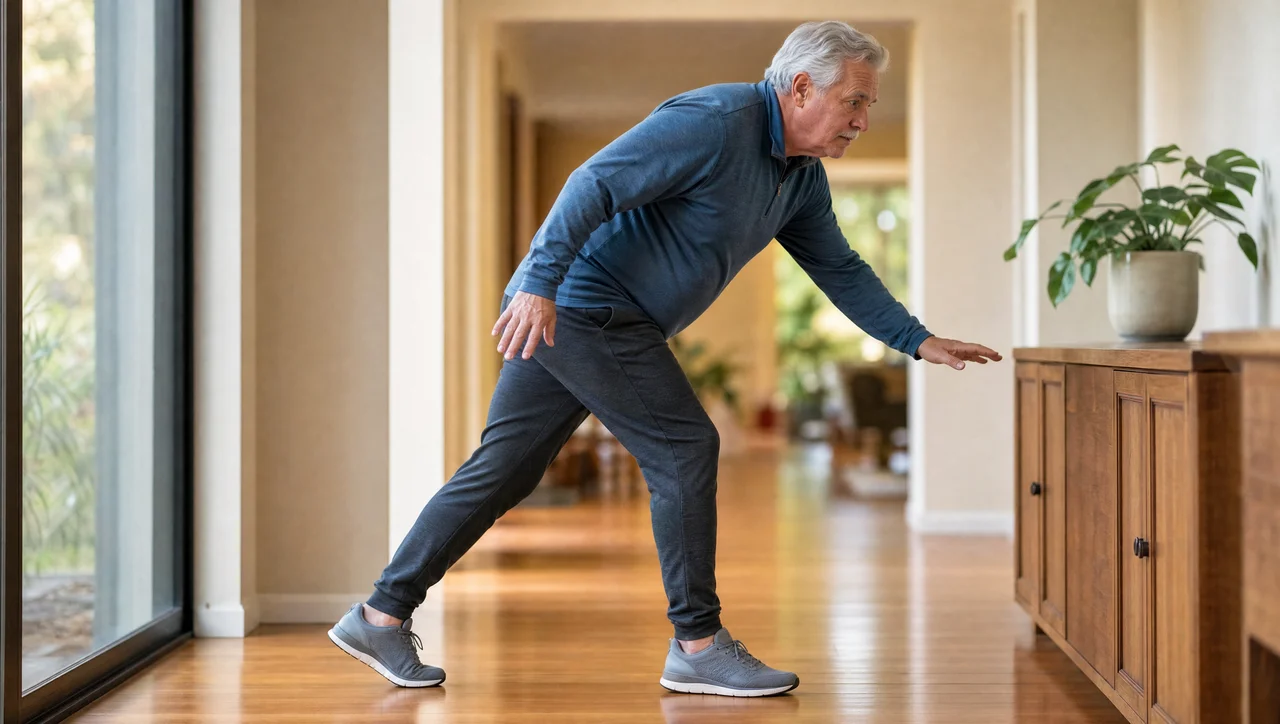
This one trains the exact moment you're most worried about. You catch a toe on a cord or a kerb, you tip forward, and a foot needs to land in the right spot, fast.
📺 Watch the trip and catch in the video above.
How to do it:
- Stand up straight next to a piece of furniture, with a hand resting on it for confidence if you like.
- Slowly lean forward until you reach your tipping point.
- Catch yourself with one foot, stepping forward and landing with a deliberate thud.
- Push yourself back to the starting position, then do the same on the other leg.
That thud matters, by the way. The impact through your leg is what stresses the bone and signals it to get stronger and more dense, so if you're feeling confident, don't tiptoe through it.
Keep the furniture close for extra confidence while you're getting started, and lean a little further as your reactions sharpen.
2. The Ice Skater
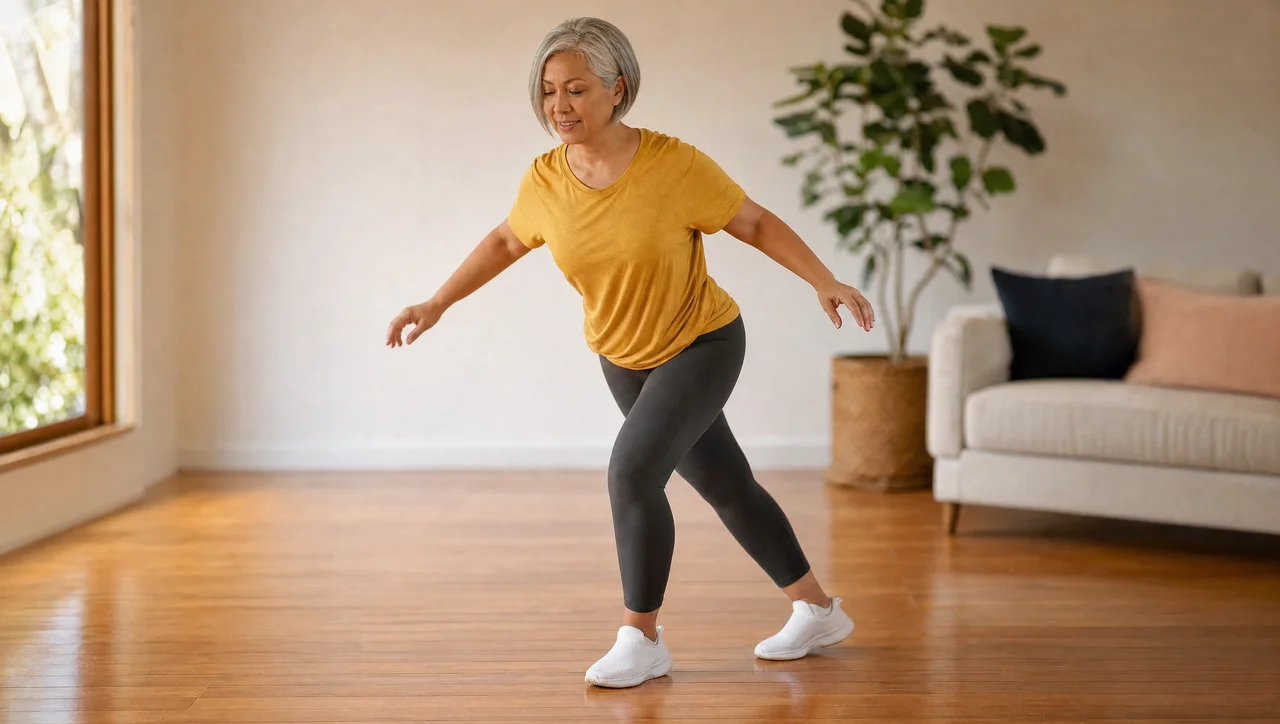
Hip fractures often happen when someone falls out to the side, so the stability this one builds through the side of your hips is worth its weight in gold.
📺 Watch the ice skater in the video above.
How to do it:
- Take a big step to one side and stand on that leg, touching the back foot down on the floor if you need a little extra balance.
- Take a big step back to the other side and do the same.
- Once that feels comfortable, turn the step into a small hop. The key tip here: hold your landing for one or two seconds before you travel back the other way. That hold is what really challenges your balance.
Have furniture close by so you can hold on if you need to.
3. The Jump and Stick
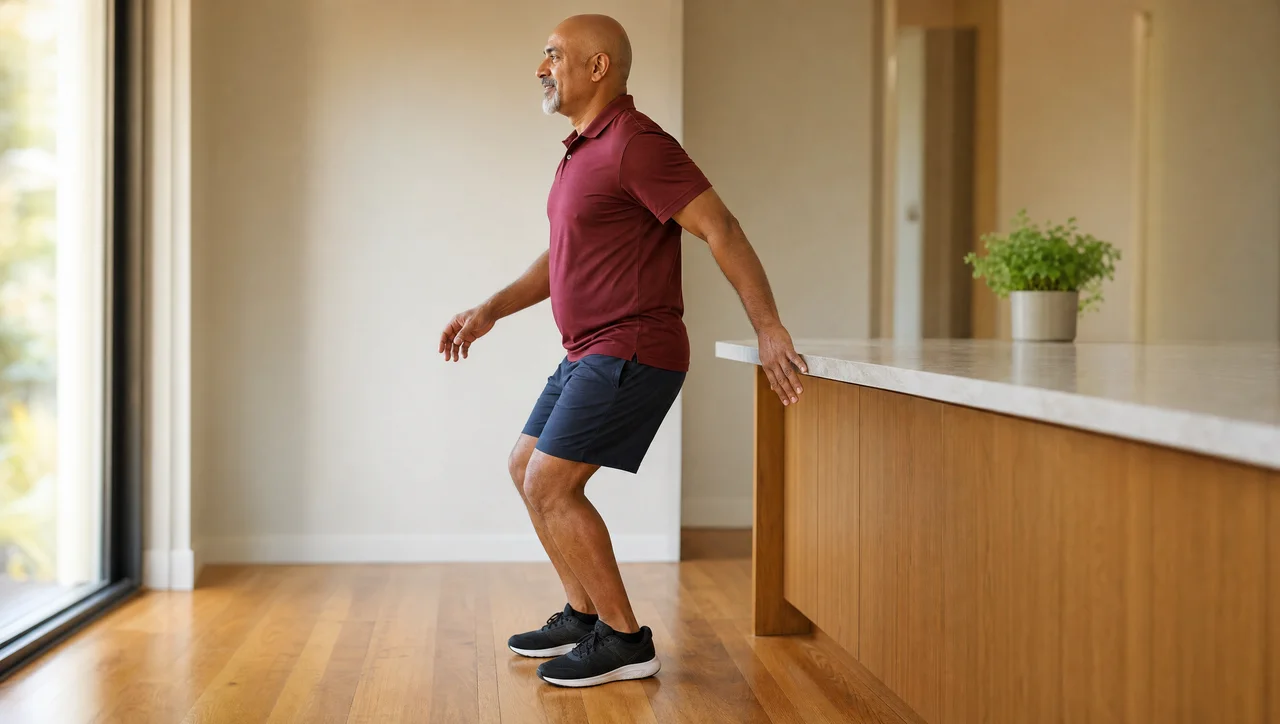
The best of both worlds. Each landing sends ground reaction force up through your bones, which is one of the clearest grow-stronger signals your skeleton can get, and sticking the landing asks real questions of your balance.
Haven't jumped in a while? No problem. There's a ladder here, and you start on whichever rung suits you today.
📺 Watch the jump and stick in the video above.
How to do it:
- Heel drops (the gentle start). Hold a piece of furniture for balance, rise up onto your toes, then thud your heels into the ground with a little bit of impact.
- A small jump (the middle step). If the heel drops feel fine, add a small two-footed jump, using the furniture to help at first, and aim to land with a little impact and then hold nice and still.
- Jumps without support (the top of the ladder). Take your hand off the furniture and the balance challenge goes up a great deal. From there you can add direction, jumping forwards, to the side, or even a small backwards jump with something sturdy right beside you.
Start nice and small. You don't need the whole ladder in week one.
A reminder from our team"Start with the version that feels almost too easy, because the win in week one is simply turning up. From there the progressions do the work for you. A step becomes a hop, a supported jump becomes a free one, and within a couple of months you're moving in ways you might have thought were behind you. Small and regular beats one brave effort every time."
Prefer a guided routine with the pacing built in? That's exactly what our free 55+ Video Series is for, with our physio team demonstrating every movement so you always know you're working at the right level.
Start the Free 55+ Video Series →Putting It All Together
You don't need a gym or a spare hour for this. A short session, two to three times a week, covers all three exercises.
A simple way to run your week:
- Do two to three sessions a week, with a rest day in between where you can.
- Work through the three exercises in order: the trip and catch, the ice skater, then the jump and stick.
- Start each one at the level where the effort is real but you stay in control, with a wall or chair within reach.
- When a level starts to feel comfortable, that's your green light to move up a rung: a bigger lean, a wider hop, a jump without the furniture.
Done consistently, the changes show up in the ordinary moments. Recovering from a little stumble on the footpath like it was nothing. Stepping off a kerb without thinking twice. Trusting your feet again.
The Bottom Line
A diagnosis of low bone density can make the world feel like it needs to shrink. Move less. Slow down. Be careful.
The truth runs the other way. Having reduced bone density does not mean you have to stop moving quickly or experiencing impact. In fact, practising these dynamic, impact-based balance moves is one of your best defences against a fracture, because it works on the fall and the bone at the same time.
So start small this week. Use a wall or a chair for confidence, have a crack at the gentlest version of each exercise, and gradually increase the size of your steps and hops as you feel stronger. Your feet are more trainable than you've been led to believe, and so are your bones. 💪
Ready to get started? Our free 55+ Video Series includes complete follow-along strength and balance workouts, with guidance from our physio team so you can build steadier feet and stronger bones safely from day one.
Get the Free 55+ Video Series →