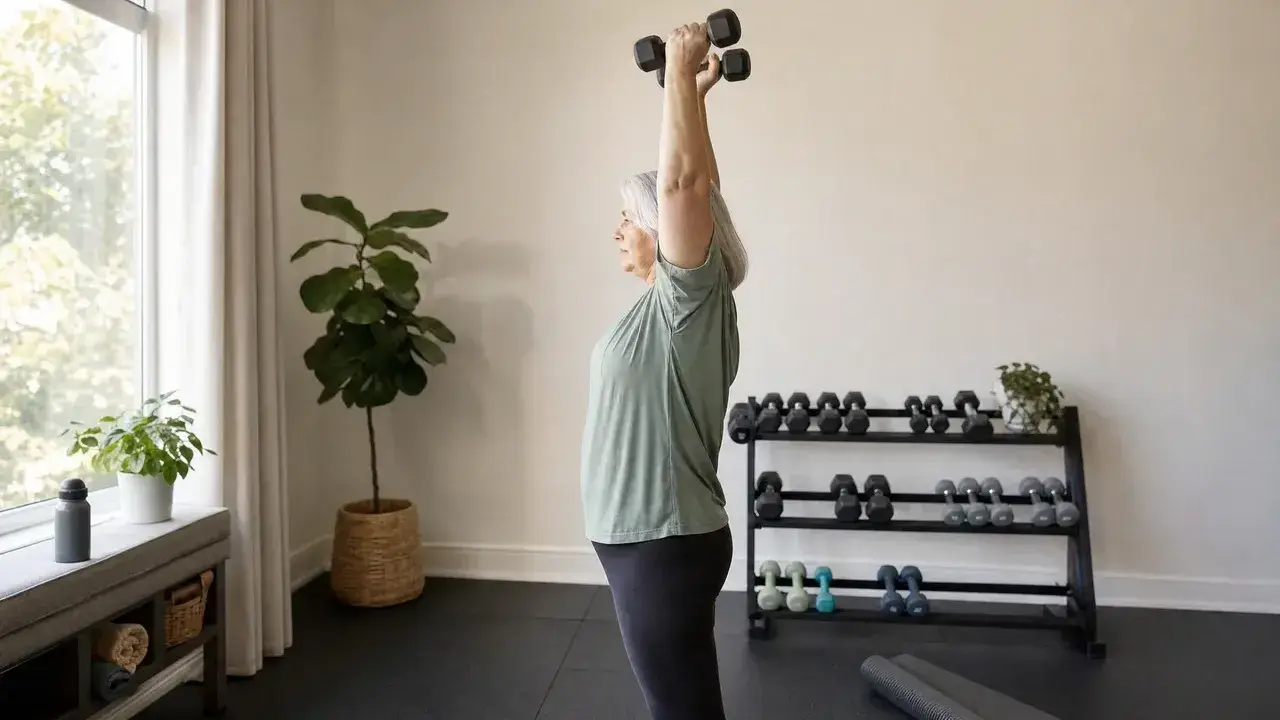
Build Bone Density After 55: The Two Heavy Lifts You Can Start at Home

Brodie - Be Mobile Physiotherapy
Brodie is a physiotherapist at Be Mobile whose passion for exercise started early - an active, sporty childhood, and a knee injury playing high-school rugby that put him through a heap of physio and inspired him to study it himself. He truly embodies our value of evidence-based practice and is passionate about exercise for older adults. Outside of work, you'll find him with friends, at the rugby, or reading up on sci-fi, cosmology and physics.
Read Brodie's full bio →


A practical guide from the Be Mobile Physiotherapy team on why lifting heavy is one of the best things you can do after an osteoporosis diagnosis, and the two exercises to begin with today.
Maybe the diagnosis arrived a few weeks ago and you have been moving a little more carefully ever since.
Perhaps you have started leaving the heavier shopping bag in the boot for a second trip. Perhaps you catch yourself hesitating before lifting a full watering can. Or perhaps the word osteoporosis has quietly turned into a reason to do less of everything.
That reaction makes complete sense. Nobody hands you a manual along with the news, and "be careful" is the message most people walk out of the appointment with.
Here's what we want you to know straight away. Being too careful is the bigger risk. The thing your bones respond to best is the exact thing a diagnosis makes you want to avoid, which is real, challenging load.
Let's break it down. First, what is actually going on inside a bone.
Your Bones Are Not a Timber Frame
Most people picture the skeleton as a timber house frame. Something built once, fixed in place, and from here able only to wear down.
That picture is a long way off. Your bones are not lifeless timber holding up a house. They are living tissue, far more like muscle, breaking down and building back up again constantly.
Which means they follow the same rule your muscles follow: use it or lose it.
Give a bone the right kind of stress and it reads that as a message. Something heavier is coming, we had better get stronger. Your body answers by laying down more bone, and over time that bone becomes denser and better able to handle what you ask of it.
The breaking-down side of the equation does speed up for a while after menopause. Women can lose up to 10% of their bone mass in the first five years after menopause begins. That figure looks alarming written down, though it arrives with something far more useful attached.
Your bones stay responsive for your entire life. There is no age at which they stop listening.
What "Heavy" Actually Means
Now to the word that puts people off.
Lifting heavy sounds like the last thing you should be doing when you have just been told your bone density is low. Most people, very reasonably, pick up the lightest weight in the cupboard and stay there for years.
Here is what the research shows instead. Men and women over 55 with very low bone density can take part in heavy resistance training safely, provided they begin at a level they can manage and build up gradually.
The word heavy is doing something specific here, and it is probably not what you are picturing. Heavy means a weight that feels properly challenging for you, today. For one person that is a shopping bag with four or five books in it. For another it is a 12kg kettlebell.
The number on the weight barely matters. The effort is what your bones are reading.
Light weights, lifted comfortably, are a pleasant way to spend ten minutes. They simply do not give your bones a strong enough reason to adapt. Somewhere near the end of your set, the work has to feel like work.
Why This Earns Its Place After 55
Bone density is the headline reason for these two lifts. The reason they matter on an ordinary Tuesday is simpler than that.
Think about where strength like this actually shows up:
- Carrying the shopping in from the car in one trip instead of three.
- Lifting a full watering can, or shifting a heavy pot across the garden.
- Picking up a grandchild who has decided they would very much like to be picked up.
- Getting a case into the overhead locker, or a heavy box onto a high shelf.
Every one of those is either a lift from the ground or a press overhead. The two exercises below train precisely those patterns, which is what makes them worth twenty minutes twice a week. You build the bone, and you keep hold of the ability at the same time.
Is Lifting Heavy Really Safe With Osteoporosis?
If you have been told the bones in your spine are low in density, bending over to pick a kettlebell up off the floor can feel precarious.
We always come back to a measured "risk vs reward" view here, so let's be honest about both sides.
What is the risk of not doing this? Your bones keep receiving no reason to hold on to what they have. Your muscles quietly weaken alongside them. The shopping, the watering can and the top shelf all get harder each year, until the thing you were protecting yourself from becomes more likely rather than less.
What is the risk of doing this? Low, as long as you start with a weight you can manage well and build up slowly. Both exercises below have a gentler version sitting underneath them. If your shoulders complain overhead, there is a seated variation. If your back will not tolerate bending all the way to the floor yet, there is a shortened version of the deadlift.
The motto we keep coming back to is the same one we use for everything: start low, go slow. Begin where five to ten reps is a real effort and your technique still holds together. Add weight only once that stops feeling hard. There is no prize for rushing.
This guide is for educational purposes only and should not replace specific advice from a medical professional.
If you have had a recent fracture, recent surgery, or your doctor has given you specific instructions about lifting, get a professional opinion before adding these in. For everyone else, the risk of building up carefully is small.
A reminder from our team"The word heavy is what worries people, and I completely understand why. What I always explain in clinic is that heavy is personal. It means whatever feels properly hard for you on the day, and for plenty of people starting out that is a shopping bag with four or five books in it. Nobody is asking you to walk into a gym and load up a barbell. Start with something you can control, do it well, and add a little more when it begins to feel easy. Your bones respond to the effort, not to the number written on the weight."
Brodie Morrison, 55+ Expert Physiotherapist, Be Mobile Physiotherapy
Want to follow along instead of working from a written guide? Our free 55+ Video Series walks you through a full strength workout step by step, with our physio team demonstrating every move, every modification and every cue, so you can pick the right version for you.
Watch the Free Video Series →The Two Bone-Building Lifts
Two exercises, done at least twice a week. One presses weight away from you overhead. One picks weight up off the ground. Between them they load the spine, the hips and the shoulders, which are the areas that matter most.
Keep something sturdy nearby, and give yourself full permission to start lighter than you think you should.
1. The Overhead Press
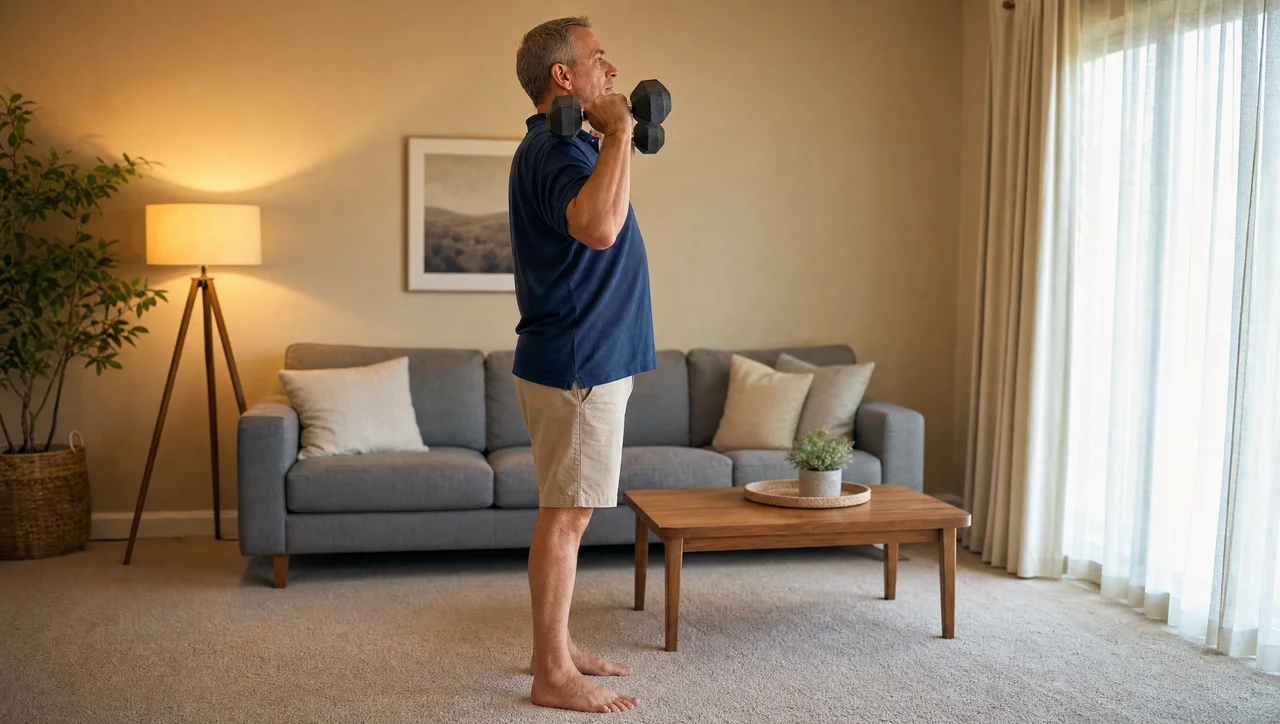
Press a weight overhead and the force travels straight down through your hands, into your arms, through your shoulders and into your upper spine. At the same time, the big muscles of the shoulders and upper back are pulling hard on those same bones. Direct load and muscular pull together, which is what makes this one so good for the upper body.
Watch how to perform the Overhead Press here:
Setup:
- Stand tall with your feet planted about shoulder width apart.
- Hold your weights at shoulder height. Elbows tucked in, out to the side, or somewhere in between.
- There is no perfect elbow position here, so use whichever feels best in your shoulders.
How to do it:
- Press the weights straight up towards the ceiling, directly overhead.
- Lower them back to shoulder height under control.
- Keep the press travelling straight up rather than out in front of you, which is harder and less comfortable.
The Dose: 3 sets of 5 to 10 challenging reps, at least twice a week. The last rep or two should feel like real work.
You do not need dumbbells for this. A bag loaded with books does the job, and so does an old broomstick with a milk bottle tied at each end, filled with water, sand or dirt. Start it in front of your face, press overhead, lower it back down. Add books or top up the bottles as you get stronger, and move your hands narrower or wider until it feels comfortable.
To adjust: if your shoulders dislike pressing directly overhead, sit on the edge of a sturdy chair and lean back against the backrest, then press up from there. You still get the loading and the strength benefit through the arms and upper body, at an angle your shoulders are happier with.
One last thing worth checking. If you could keep going almost all afternoon, the weight is too light. Load the bag up, build to it gradually, and make sure there is genuine effort in there.
2. The Deadlift
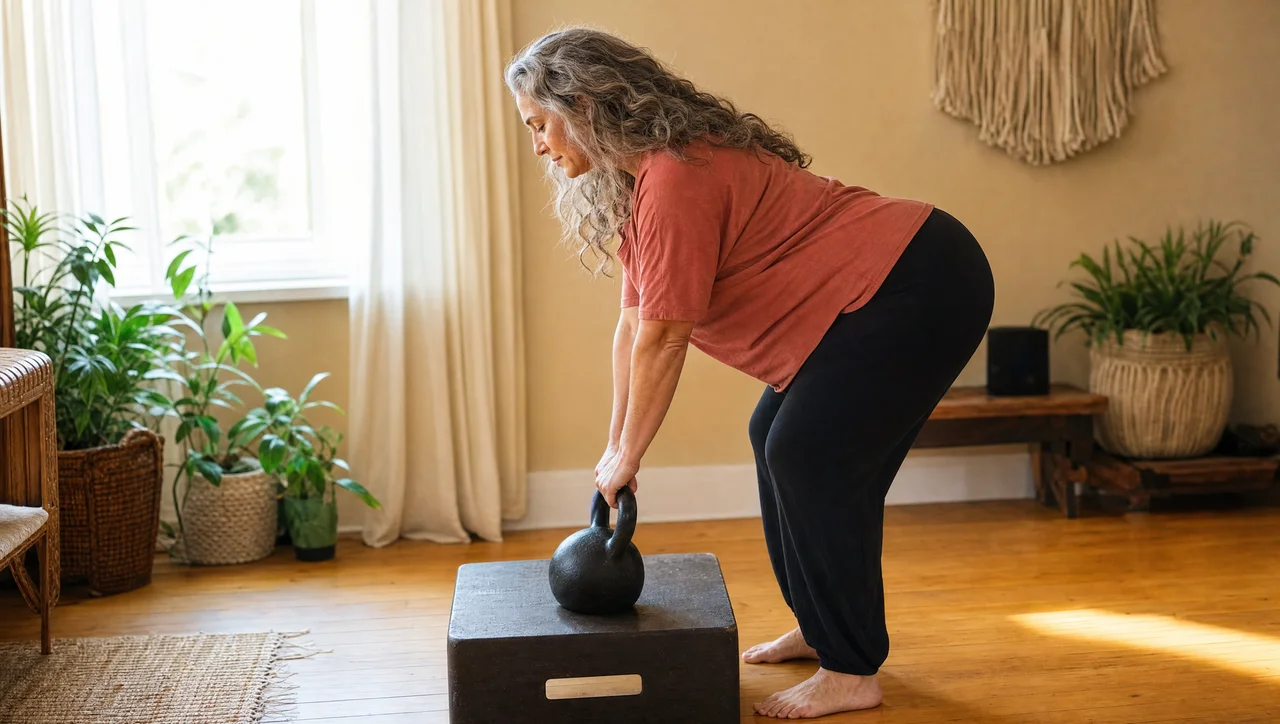
The word deadlift tends to bring competition platforms and chalk to mind. All it actually means is picking a weight up off the ground, which is something you already do most days without giving it a second thought.
This is the one that worries people with low bone density through the spine. The evidence here is reassuring. It is safe when you start at a manageable weight and build towards that heavier, challenging intensity over time.
Watch how to perform the Deadlift here:
Setup:
- Stand with your feet about hip width apart.
- With one weight, such as a kettlebell, place it on the floor between your feet.
- With two weights, one sits just outside each foot.
How to do it:
- Push your bottom back and bow forward towards the weight, letting your knees bend.
- Keep the weight close to your body the whole way. Out in front of you is an inefficient position, and you will not feel strong there.
- Drive up through your legs to stand tall again, weight still close.
The Dose: 3 sets of 5 to 10 challenging reps, at least twice a week.
Kettlebells, dumbbells and barbells all work. So does the same bag of books from the overhead press. Whichever you use, the principles do not change: keep it close, and bow over.
To adjust: if your back is sore, or you cannot bend all the way forward comfortably yet, shorten the range to begin with. Rest the weight on a low step or a stack of books so it starts at around knee height, then lower that starting point over the following weeks. Working all the way down to the floor over time is what loads the spine and lower limbs best, so it is worth building towards.
A reminder from our team"People are often surprised when I tell them the deadlift belongs on the list. It sounds like exactly the movement you would expect to be warned off. What we know now is that avoiding it does not make a spine safer, it just leaves it less prepared for the day you have to lift something anyway. Start with a weight you can handle comfortably, keep it close to your body, and shorten the range if you need to. Build it up over a few months and you will be doing the one movement that loads your spine and hips better than almost anything else."
Brodie Morrison, 55+ Expert Physiotherapist, Be Mobile Physiotherapy
Prefer a guided, follow-along routine? If you would like to build strength alongside our physio team, with full demonstrations, pacing and modifications built in, that is exactly what our free 55+ Video Series is for.
Start the Free 55+ Video Series →Putting It All Together
You do not need a gym membership or a spare hour for this. Two exercises, twice a week, with whatever you can find around the house.
A simple way to run your week:
- Both lifts, at least twice a week, with a rest day in between where you can manage it.
- 3 sets of 5 to 10 reps each, with the last couple of reps feeling properly challenging.
- Start at a weight you can manage comfortably, then add a little more once ten reps stops feeling hard.
That last point carries most of the benefit over the long run. The progression is where the bone response lives. A weight that challenged you in March should not still be challenging you come September. As you get stronger, you need to use heavier weights to keep getting the same benefit.
The Bottom Line
An osteoporosis diagnosis tells you where your bones are today. It has very little to say about where they can be two years from now.
Your bones want to be strong. They have simply been waiting for a reason to bother, and challenging weight, lifted well and built up patiently, is the clearest reason you can give them.
So start where you are. Put a few books in a bag this week and press them overhead. Add another book when it starts to feel easy. Your future self, carrying the shopping in one trip and lifting the grandkids without a second thought, will be glad you did. 💪
Ready to get started? Our free 55+ Video Series includes complete follow-along workouts featuring strength exercises like these, with guidance from our physio team so you can build confidence safely from day one.
Get the Free 55+ Video Series →