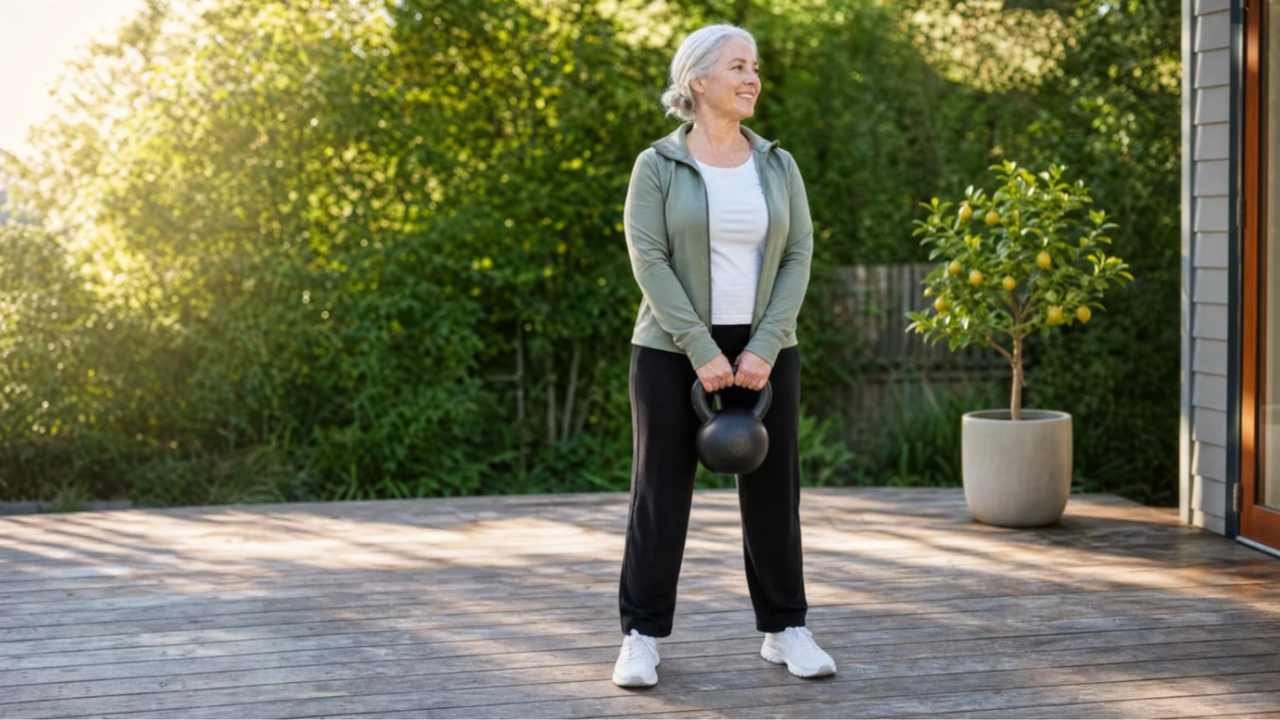
The 4 Exercises Science Says Actually Build Bone Density After 55

Mitch - Be Mobile Physiotherapy
Mitch is a physiotherapist with over 23 years' experience helping adults aged 55+ exercise safely, including when they're managing pain or chronic conditions. He is the Founder and CEO of Be Mobile Physiotherapy, a physio-led exercise company offering online and in-person programmes that keep older adults strong, confident, and able to enjoy life with the people they love.
Read Mitch's full bio →


The Be Mobile Physiotherapy team break down the landmark trial that changed how physios treat osteoporosis and demonstrates the four movements that increased bone density in women with an average age of 58.
Perhaps you've always pictured your skeleton as the framework of a building. A scan came back showing the frame is thinning, so the sensible response felt obvious: protect it, treat it gently, and above all don't load it up.
Or perhaps you're the walker. Same route every morning, rain or shine, and you've quietly assumed all those kilometres must be keeping your bones in decent shape.
Both responses make complete sense, and the commitment behind them deserves real credit. Consistency is the hardest part of exercise, and you already have it.
Here's what we want you to know, though. Bones don't strengthen from being protected, and for most people they don't strengthen much from walking either.
The whole article in one line: your bones are living tissue that only grows stronger when it's asked to handle serious load, and one landmark study showed exactly which four exercises deliver that signal, safely, in women who already had osteoporosis.
Your Bones Work Like a Gardener's Hands
The steel frame of a house is fixed the day it goes up. It never gets stronger, and the best you can hope for is that it wears out slowly. Plenty of people think of their skeleton exactly this way, which is why "protect the frame" feels like the only sensible plan.
Your bones don't work like a steel frame. They work like the skin on a gardener's hands.
Spend a season digging, pruning and hauling pots without gloves, and the skin across your palms toughens up in response to the work. Hang up the tools for a year and that toughness quietly fades away. The skin adapts to exactly what you ask of it, in both directions.
Bones follow the same rule. Stress them enough and they respond by laying down new, denser tissue, exactly like muscle. Leave them unchallenged and they gradually thin, which over time becomes osteoporosis. The word literally means porous bone: a reduction in bone mineral density that makes fractures more likely.
The encouraging part is that this adaptability never switches off. Medications such as Prolia injections can help, and calcium and vitamin D supplements play a supporting role. Exercise is an excellent tool alongside them, with one important catch: only some exercise works.
Gentle movement doesn't create enough stress to force adaptation. Walking? Wonderful for your heart, nowhere near enough load to shift your bones. The two best-evidenced approaches are high intensity resistance training and impact loading, and one study proved it in style.
The LIFTMOR Trial: Where the Proof Comes From
Researchers took a group of women with osteoporosis, average age 58, and split them in two.
The first group followed a low intensity routine built on body weight movements and light dumbbells. The kind of programme a lot of people with a bone density diagnosis are handed, and the kind that feels responsible.
The second group did something that would have sounded reckless a generation ago. They followed a high intensity resistance training programme built on heavy weights and big movements, plus impact work, twice a week.
After eight months, the results told a clear story.
The high intensity group saw a 3% increase in bone mineral density. That number is genuinely significant, because the natural course of ageing is a steady decline in bone mass. These women didn't just slow the slide, they reversed it.
The low intensity group experienced the natural decline. Their gentle routine wasn't the cause, and it wasn't bad for them. It simply never applied enough stress to ask their bones for anything new.
One more finding matters just as much as the headline number. The heavy training produced no adverse effects in the participants. Women with diagnosed osteoporosis lifted heavy weights for eight months, built measurable bone, and came through without injury.
A reminder from our team"The finding I keep coming back to is the low intensity group. These were women doing everything right on paper, showing up twice a week for eight months, and their bone density still drifted down. Their effort was real. The load just never got high enough to ask their bones for anything new."
If you'd rather watch than read, our free 55+ Video Series has our physio team demonstrating safe, structured strength work on screen, with a starting version of every movement shown clearly.
Watch the Free 55+ Video Series →Is Lifting Heavy Actually Safe?
Heavy deadlifts and jumping probably sit near the top of the list of things you assumed were off the table after a diagnosis. Set the two paths side by side, though, and the picture changes.
The risk of avoiding load: your bones keep missing the one signal that builds them, density continues its natural drift downward, and every year the everyday knocks and stumbles of life carry a little more consequence. The gentle path feels safe while quietly leaving you more exposed.
The risk of loading up gradually: small, and the trial data backs that up. The LIFTMOR participants trained heavy for eight months with no significant adverse effects, because the loading was progressive. Nobody handed them a heavy barbell on day one.
Progressive loading is the whole secret. Start with a weight you can comfortably manage today, continue the movement until it feels second nature, then nudge the load up a little at a time over weeks and months. Start low, go slow.
If you've had a recent fracture or surgery, or your doctor has given you specific movement restrictions, please follow their advice and check in before adding load.
This guide is for educational purposes only and should not replace specific advice from a medical professional. You should discuss your specific osteoporosis considerations with your treating health professional.
The 4 Science-Backed Exercises
These are the four movements the high-intensity group performed across their eight months in the trial. The study used a barbell for the three lifts, and you don't need one. Kettlebells, dumbbells or a medicine ball all work, as long as the weight is genuinely challenging for you.
1. The Deadlift
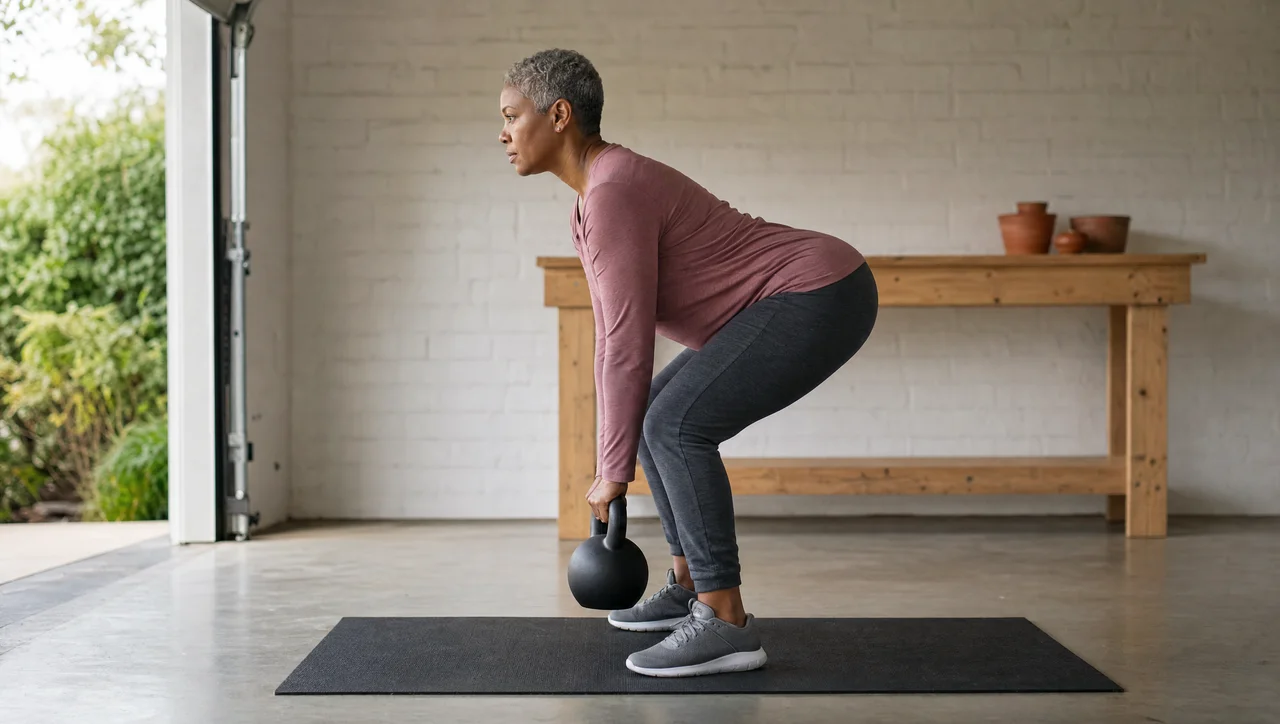
Bear with us, because the name sounds more dramatic than the movement is. A deadlift is simply picking up a dead weight from the floor, something you already do every time you lift a heavy pot plant, and it's a phenomenal movement for loading the bones of your spine.
📺 Watch the deadlift in the video above (from 2:33).
Setup:
- Stand with your feet about hip width apart, a kettlebell or dumbbell on the floor between them.
How to do it:
- Grip the weight, then stand up tall by driving through your legs.
- Lower the weight back to the floor with the same control.
To adjust: raise the weight onto a low step so you don't have to reach as far, or start lighter until the movement feels smooth. Once the last repetition of a set stops feeling like honest work, it's time to go heavier.
2. The Overhead Press
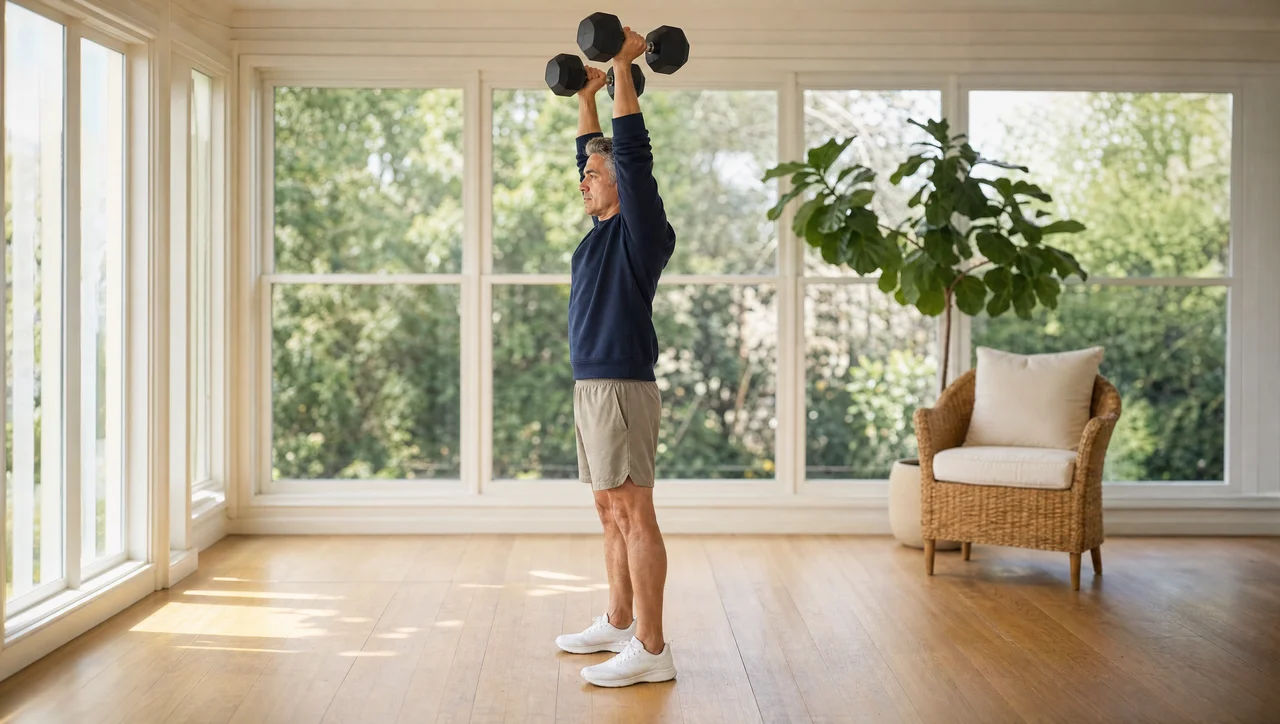
The upper body counterpart. Pressing a heavy weight directly over your head forces the bones of your arms, shoulders and upper spine to support serious load, which is exactly the signal they need to adapt.
📺 Watch the overhead press in the video above (from 2:48).
Setup:
- Stand tall with your feet hip width apart, holding a dumbbell in each hand at shoulder height.
How to do it:
- Press both weights straight up overhead.
- Lower back to your shoulders with control.
To adjust: press one arm at a time if two feels wobbly, or work from a seated position with back support while you build confidence. Progress the weight once 5 repetitions feel comfortable.
3. The Squat
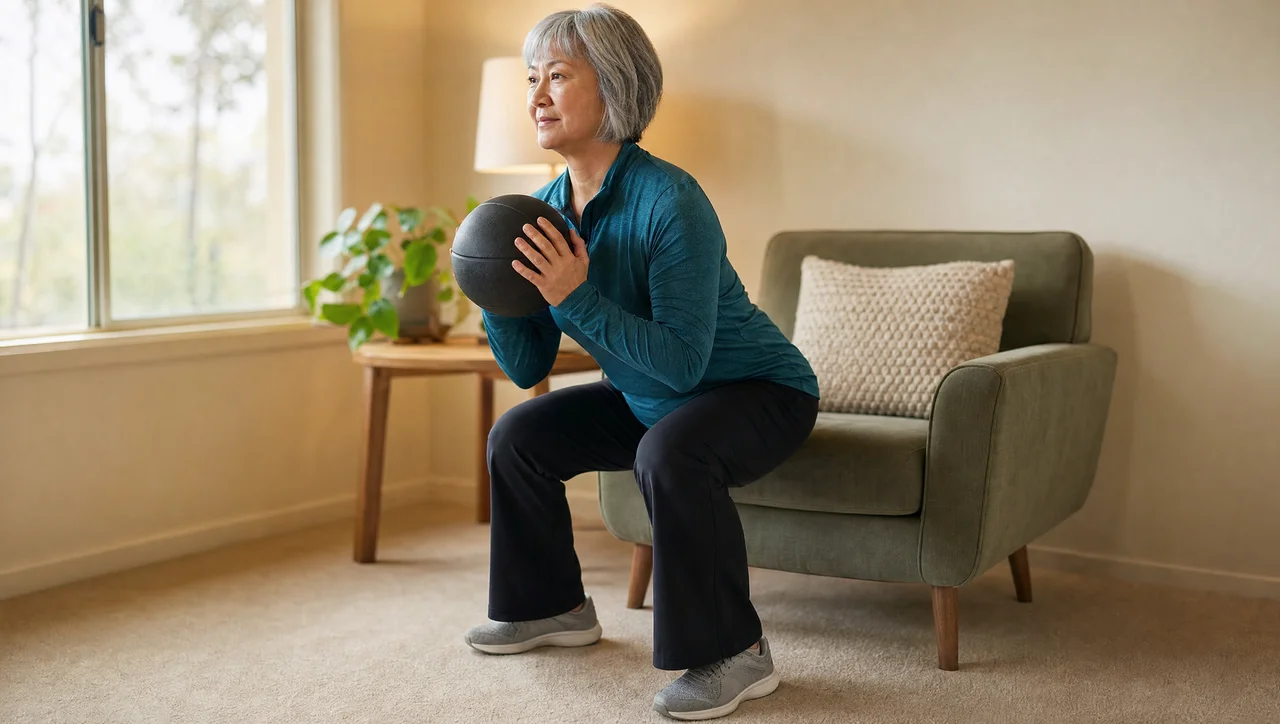
You've done this one your whole life, every time you've sat down and stood up. Adding real weight turns it into one of the best bone builders available, sending a large load through your spine and your femurs, the big bones of your thighs.
📺 Watch the squat in the video above (from 3:08).
Setup:
- Stand with your feet shoulder width apart, holding a medicine ball, kettlebell or dumbbell at your chest.
How to do it:
- Push your hips back and bend your knees to lower down as far as comfortable, as if sitting into a chair.
- Drive back up to standing.
To adjust: squat down to an actual chair as a depth guide, or lighten the weight until the pattern feels solid. When the weight stops challenging you, that's your green light to add more.
4. Jumping (Impact Loading)
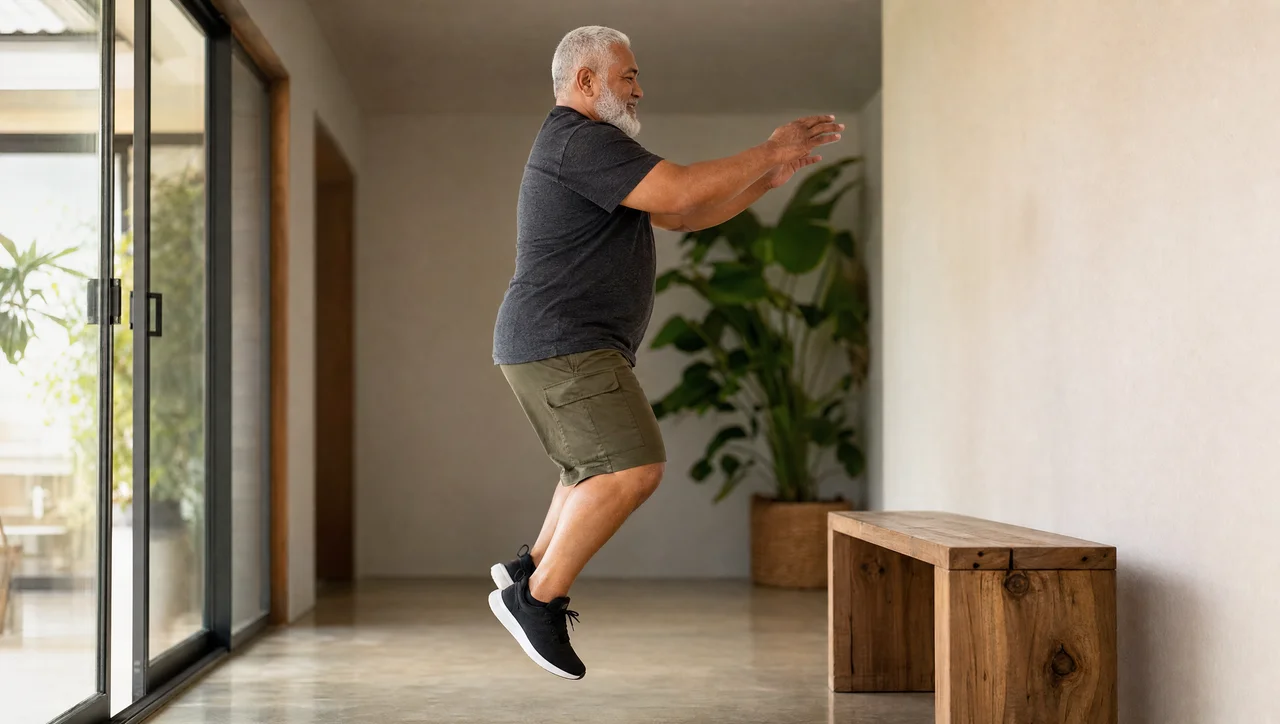
The odd one out, and a great finisher. When you land from a jump, a large ground reaction force travels straight up through your skeleton, delivering a bone-building signal that lifting alone can't quite replicate. The trial participants even used a raised bar to jump a little higher, making each landing count for more.
📺 Watch the jumping in the video above (from 3:34).
Setup:
- Stand on a firm, non-slip surface with your feet hip width apart.
- Have a bench or wall within reach for balance if you want it.
How to do it:
- Bend your knees, swing your arms, and jump straight up.
- Focus on landing as heavily as comfortably possible.
To adjust: start with brisk heel raises and drops if jumping feels like too much today, then build to small hops. As confidence grows, jump a little higher so each landing delivers a bigger signal.
A reminder from our team"Nobody walks into our clinic and picks up a heavy kettlebell on day one. We find the weight you can genuinely manage today, and we nudge it up a little at a time over months. Start low, go slow. The clients who build real bone density aren't the bravest ones in week one, they're the ones who kept on nudging."
Want these four movements programmed for you, with starting versions and progressions mapped out session by session? Our free 55+ Video Series gives you complete follow-along workouts led by our physio team, so you always know exactly what to lift and when to step it up.
Start the Free 55+ Video Series →Putting It All Together
You don't need a gym membership or a barbell to put the trial's lessons to work. A simple weekly rhythm looks like this:
- Pick your two days. The trial used two sessions a week, and that's all you need. Mark them in the diary like any other appointment.
- Run the four movements. Deadlift, overhead press, squat, then finish with your jumps or hops. The whole session fits inside half an hour.
- Choose a weight that means it. The final repetition of each set should feel like honest work. If you could chat comfortably through it, the load is too light to talk to your bones.
- Nudge the load, never leap. Each time a weight becomes comfortable, increase it slightly. Small steps, stacked over months, are what produced that 3% gain.
Run that loop consistently and you're doing precisely what the high intensity group did, adapted for your lounge room.
The Bottom Line
Your skeleton was never a fixed frame quietly wearing out. It's living tissue, listening for load, ready to toughen up like a gardener's hands the moment you give it real work to do.
The LIFTMOR trial showed that women in their late 50s with diagnosed osteoporosis could build measurable bone in eight months, safely, with four movements and two sessions a week. The natural course of ageing is decline. These women reversed it.
Gentle exercise isn't the enemy, and it isn't the answer either. Done consistently, heavy and progressive wins.
Take the gloves off this week. Pick up something meaningfully heavy, put it down with control, and trust that your bones are responding, even when you can't feel it yet. 💪
Ready to build bone with our physios guiding every session? The free 55+ Video Series gives you complete structured workouts led by our team, built on progressive loading from day one.
Get Started With the Free 55+ Video Series →